
SCIENCE COOKIES
Science articles with chocolate chips
How does Google search work?
Published: 3/8/2020
Author: Javier Pantoja

Google and the Google logo are trademarks of Google LLC, used with permission.
Whenever we want to search for something on the internet, we go to a search engine and the most common of these is Google and, without thinking, we write what we want and immediately get thousands of results, but have you ever wondered what Google and others search engines do to show you what you are looking for?
The process starts even before you make your search. When we make a search on Google we are not searching the entire web, but the Google index. The Google index is where Google organizes and stores all the web pages it knows about. To discover new sites, search engines use software programs called spiders or crawlers (crawlers from now on). Crawlers start from some websites and discover more by traveling through the links on these pages, then following the links on the next pages, and so on.
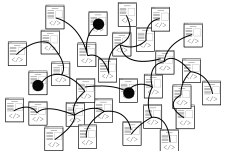
After the crawlers do their work, the Google system processes the content of the sites to obtain the necessary information about them and, finally, they are organized by various criteria to allow search algorithms to access them efficiently.
When you enter your search, the system checks hundreds of billions of websites to find out which ones match your search, using criteria such as the quality of the site, the location where the search and the site were made, keywords, how many times they are repeated and their position in the text of the site, among many others. Finally, the system combines all these factors into a score for each site and shows them to you in order of relevance and usefulness for you. All of that in a fraction of a second.
References
Advertising






Advertising