
SCIENCE COOKIES
Science articles with chocolate chips
What are myodesopsias?
Published: 20/8/2020
Author: Javier Pantoja
Have you ever heard of myodesopsias? You may have heard the term eye floaters . 7 out of 10 people see them at least at some stage in their life, however, chances are that you have never heard of them, since they are not talked about much.
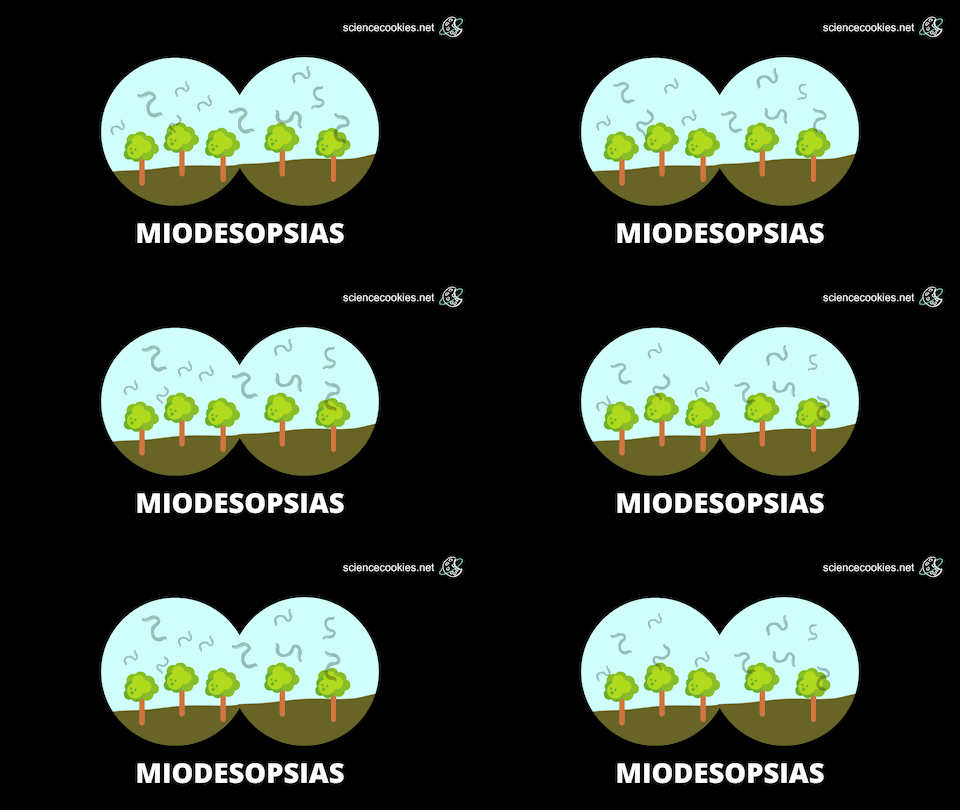
Representation of myodesopsias
The myodesopsia are in the eye and are observed as almost transparent points or filaments and with a slightly darker border. They are easier to see against a bright, clear background such as the sky or a white wall and are often difficult to focus as they move with your eyes. From the way they look, they appear to be in front of us but are actually in the back of the eyes.
Myodesopsia are pieces of the gelatinous substance that makes up most of our eyes, called the vitreous humor. Occasionally small amounts of this substance harden and cause the light that reaches the eyes to be distorted, casting shadows on the retina and creating the effect that we have spots that float in our eyes.
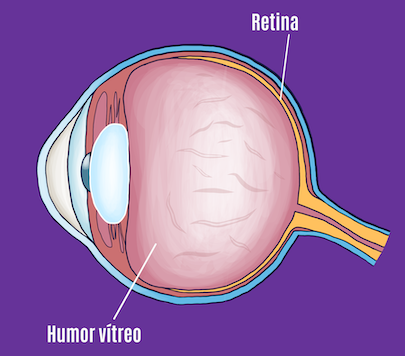
Side view of the human eye. The myodesopsia are shown in the vitreous humor.
The most common causes of myodesopsias are age and advanced myopia, although their correlation with diabetes is also frequent; however, they may occur from other causes.
Myodesopsias by themselves do not require treatment. Over time they can be deposited and out of sight or the brain can get used to and, eventually, ignore them. It is also possible to undergo certain surgical procedures with laser to remove them.
Normally, myodesopsia do not cause serious vision problems and can be ignored, however, in some cases, complications may arise from them or they may be a sign of a major problem. This happens if they are too many or too dense and impair vision or if there is a sudden appearance of many myodesopsias, they can indicate a serious injury or disease, such as detached retina or vitreous hemorrhage, and it is necessary to see a doctor to rule out those possibilities and prevent health problems.
References
Advertising






Advertising