
SCIENCE COOKIES
Science articles with chocolate chips
Cosmic latte
Published: 3/9/2020
Author: Andrea Garma
We have all felt a great admiration for the universe and the phenomena contained in it. Many elements cause us endless questions, which at first glance seem to have an answer, but when seen more thoroughly, we realize that they are not so simple. One of those questions revolves around the color of the universe, and no, the answer is not black.
Andrea Garma for Science Cookies.
In 2001, Johns Hopkins University astronomers Ivan Bladry and Karl Glazebrook conducted an analysis of more than 200,000 galaxies to study the origin of stars and their age. However, far from ending there, this work also answered one of the most curious questions in history: What color is the universe?
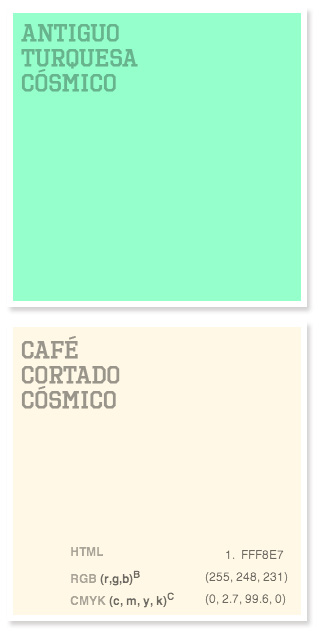
After "averaging" and synthesizing all the possible colors in the universe - that is, those seen in nebulae, stars, planets, and other bodies - they entered the data into software that resulted in cosmic turquoise . Unfortunately, the comic turquoise was a wrong result due to a bad calibration of the program, there was a mismatch in the shadow calculation.
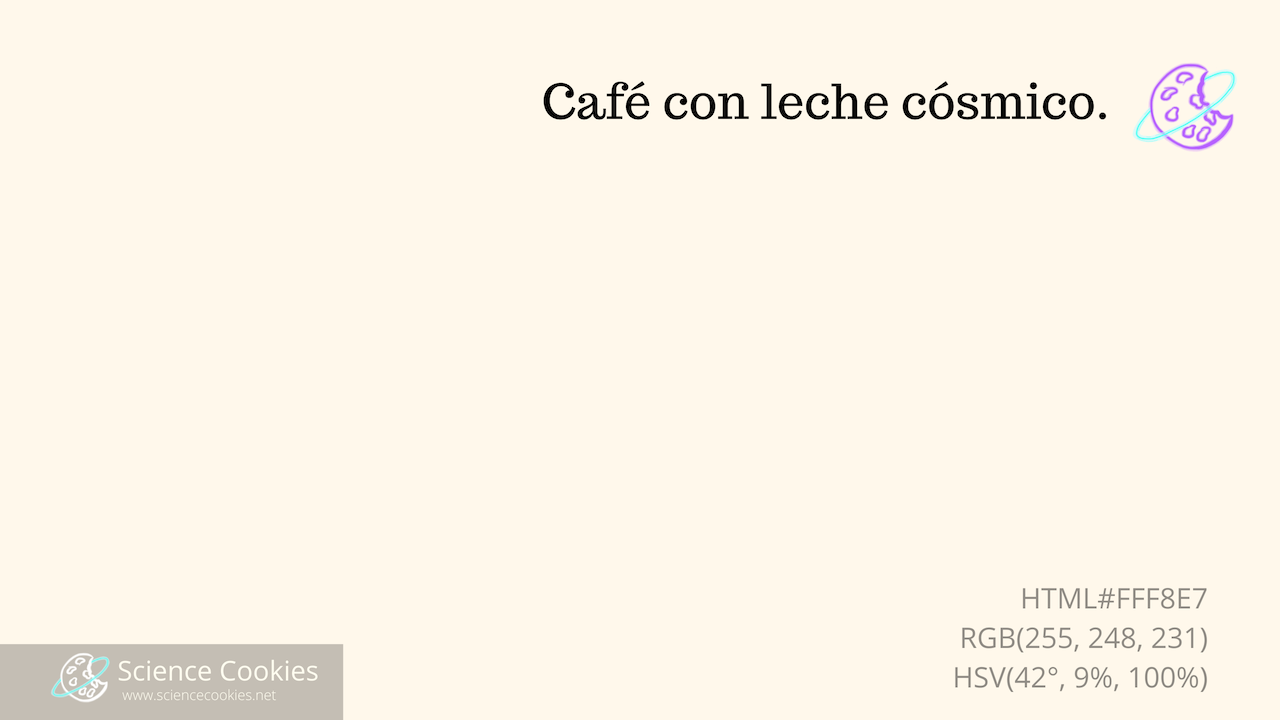
By 2002, with the software more than ready, they obtained the incredible cosmic latte , a color very similar to beige, but which, without a doubt, was the color of the universe. The results were published in the Washington Post.
A curious name
Peter Drum, who was reading it, realized the great similarity between his coffee latte and the color obtained, and decided to suggest it to astronomers, who opted for that name.
Now you know what the color of the universe is, keep feeding yourself scientific cookies!
References
https://cafeconlechecosmico.com/
https://www.muyinteresante.es/curiosidades/preguntas-respuestas/ide-que-color-es-el-universo
Advertising






Advertising